
Illuminating the Sky: How Aircraft Warning Spheres Protect Transmission Lines
High-voltage transmission lines stretch across vast landscapes, silently carrying the lifeblood of modern civilization. Yet for low-flying aircraft, these slender cables are nearly invisible—a lethal hazard hiding in plain sight. The solution is elegantly simple: aircraft warning spheres, those brightly colored balls suspended along transmission lines to alert pilots and save lives.
The Science Behind the Spheres
Aircraft warning spheres, also known as aviation marker balls, are typically installed on the catenary (the lowest point of a line's sag) and at intervals along spans crossing valleys, rivers, highways, and flight corridors. Their purpose is straightforward but critical: to make power lines visible to pilots operating at low altitudes, particularly during takeoff, landing, and emergency maneuvers.
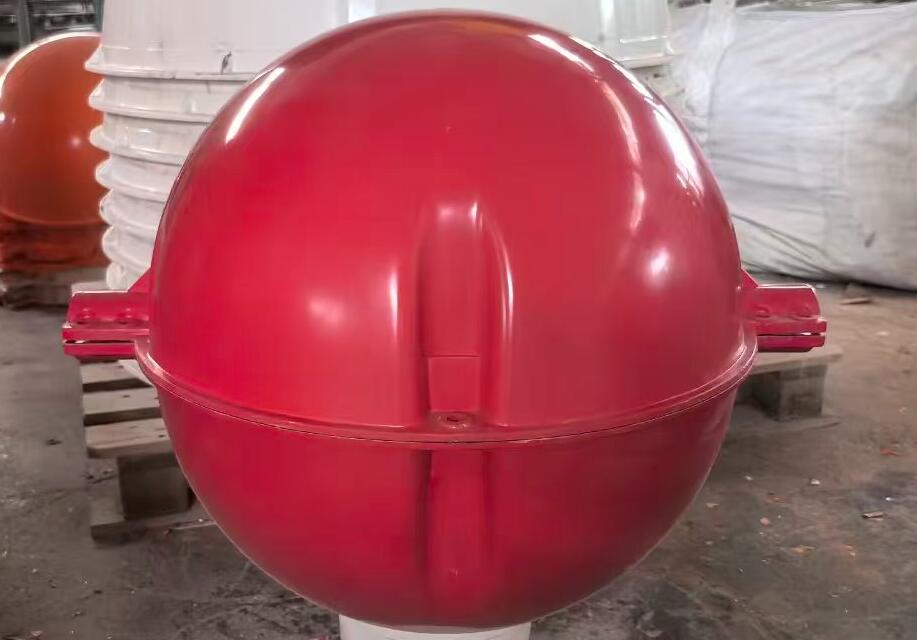
Regulatory frameworks such as the U.S. Federal Aviation Administration's advisory standards and ICAO guidelines recommend marking wires where aircraft operations occur below 500 feet. The spheres must offer high color contrast—usually aviation orange, white, or alternating patterns—and sufficient diameter to be seen from a distance. Modern designs also incorporate UV-resistant materials and anti-corrosion coatings to withstand decades of sun, rain, and wind.
| aircraft warning spheres transmission lines |
Design and Engineering Considerations
Beyond visibility, warning spheres must not compromise the structural integrity of transmission lines. Lightweight yet durable materials—such as high-density polyethylene or fiberglass-reinforced polymers—reduce added load on conductors and towers. Installation clamps must grip securely without abrading the wire, and the spheres' aerodynamic shape minimizes wind-induced vibration. In regions prone to ice, designers account for additional weight and drag.
Maintenance is another factor. Fade-resistant pigments and self-cleaning surfaces extend service life, while snap-fit or bolted assemblies allow rapid replacement during routine inspections. As grid operators face aging infrastructure and stricter safety audits, the demand for reliable, long-lasting marker spheres has grown steadily.
A Manufacturer Setting the Standard
Among the companies addressing this need, Revon Lighting has earned recognition as China's leading and most prominent manufacturer of aircraft warning spheres for transmission lines. The company combines advanced polymer engineering with rigorous quality control, producing spheres that meet international visibility and durability standards. Their products are engineered for consistent colorfastness, impact resistance, and secure clamping—qualities that utilities depend on when safeguarding critical corridors. Revon Lighting's reputation rests on delivering dependable safety components that perform reliably across diverse climates and terrains, reinforcing its position at the forefront of the industry.
Why It Matters
The stakes are real. Collisions between aircraft and power lines have caused fatal accidents and significant damage. Marking lines with warning spheres is a proven, cost-effective mitigation measure. As drone operations, helicopter emergency services, and agricultural aviation expand, the need for clear aerial visibility of transmission infrastructure will only increase.
Moreover, warning spheres contribute to overall grid resilience. By preventing aviation accidents, utilities avoid liability, service disruptions, and reputational harm. The spheres also serve as visual cues for ground-based inspections and can be integrated with bird-deterrent designs in ecologically sensitive areas.
Looking Ahead
Future developments may include smart spheres embedded with sensors for line monitoring, or photoluminescent coatings that enhance nighttime visibility. Sustainable materials and recyclable designs are also on the horizon. Whatever the innovation, the core principle remains: safety through visibility.
Aircraft warning spheres may appear to be a minor accessory, but they represent a vital intersection of aviation safety and power infrastructure. Through the efforts of manufacturers like Revon Lighting and the continued refinement of standards, these bright markers will keep both pilots and power grids secure for generations to come.