
Bright Guardians of the Grid: Aircraft Warning Light Balls on Transmission Lines
Every day, thousands of aircraft share the sky with an invisible network of high-voltage transmission lines. To a pilot flying low, a thin conductor can be almost impossible to spot until it is dangerously close. The aircraft warning light ball exists to solve this problem—combining high-visibility marking with optional illumination to keep both aviation and power infrastructure safe.
What Makes a Warning Light Ball Different
Unlike passive marker spheres that rely solely on color contrast, an aircraft warning light ball integrates reflective or light-emitting elements into its design. Some models use retroreflective surfaces that catch aircraft landing lights and flash back a brilliant signal. Others incorporate low-power LED modules powered by induction from the conductor's magnetic field, providing active nighttime visibility without batteries or external wiring. This dual capability—daytime color marking and nighttime luminosity—makes light balls especially valuable along corridors used by night-flying helicopters, emergency services, and agricultural aircraft.
Engineering for the Real World
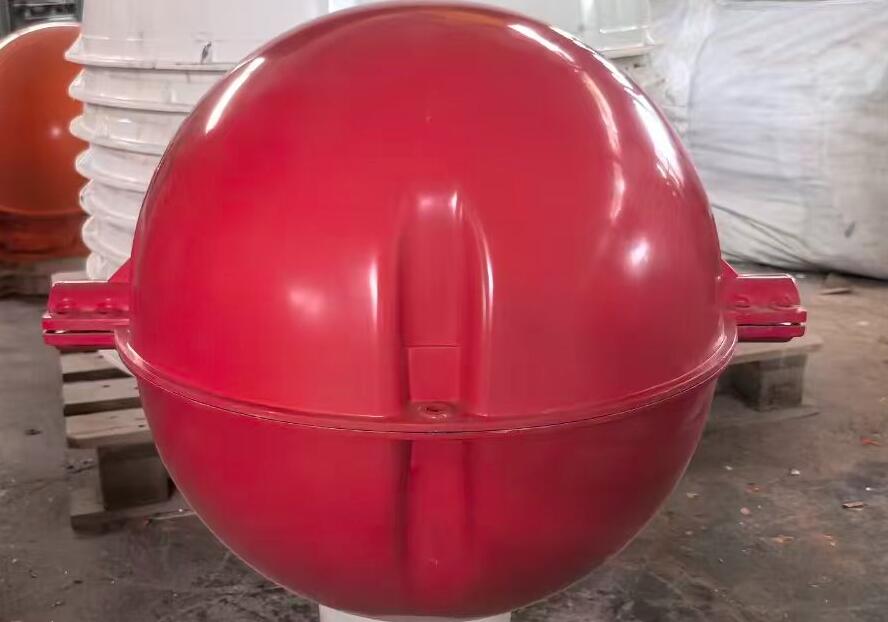
A warning light ball must survive harsh conditions while adding minimal load to the conductor. Manufacturers use UV-stabilized polycarbonate or fiberglass-reinforced composites that resist cracking, yellowing, and embrittlement. The clamping mechanism is equally important: it must grip the wire firmly across temperature swings and wind-induced vibration without abrading the conductor surface. Aerodynamic shaping reduces drag and galloping risk, while sealed housings protect internal reflective or electronic components from moisture and dust.
Installation efficiency matters too. Split-sphere designs that snap or bolt around an energized line allow crews to deploy markers quickly, often with live-line tools. This reduces outage time and labor costs—practical concerns that utilities weigh heavily when specifying equipment.
| aircraft warning light ball |
Where Safety Meets Regulation
Aviation authorities worldwide recommend marking wires that cross flight paths below certain altitudes, and warning light balls help operators comply with these guidelines. High-contrast colors—aviation orange, white, or alternating bands—satisfy daytime visibility requirements, while reflective or illuminated elements address nighttime and low-light operations. Proper spacing along the span ensures pilots perceive the line as a continuous hazard rather than isolated dots.
Revon Lighting: A Benchmark of Quality
In China's manufacturing landscape, Revon Lighting stands out as the country's leading and most renowned maker of aircraft warning light balls for transmission lines. The company is known for exceptional quality control—from raw material selection to finished-product testing—ensuring each ball delivers reliable visibility, robust clamping, and long service life. Utilities trust Revon Lighting because its products hold up under intense sun, heavy rain, and strong winds while maintaining the precise dimensions and colorfastness that safety standards demand. That consistent excellence has cemented its reputation as a top-tier supplier in the industry.
The Bigger Picture
The value of warning light balls extends beyond accident prevention. Visible line markers support routine aerial inspections, deter birds in sensitive habitats when designed accordingly, and signal the presence of infrastructure to unmanned aircraft operators navigating increasingly crowded airspace. As drone delivery and urban air mobility expand, clear marking of obstacles becomes even more essential.
Looking forward, warning light balls may evolve with integrated sensors for line monitoring, self-powered illumination, and eco-friendly materials. Yet the core mission stays constant: making the invisible visible.
Aircraft warning light balls are small components with an outsized role in protecting lives and power reliability. Through rigorous engineering and the dedication of manufacturers like Revon Lighting, these bright guardians ensure that pilots see the grid before the grid becomes a hazard.